Reverse osmosis gets most of the attention in a water treatment plant, but it relies on a quieter partner to keep running well: chemical dosing. Small, carefully measured amounts of chemicals protect membranes from scale, chlorine and bacteria, and they all start in a simple container. Ask any dosing tanks supplier and they will tell you the tank is often the most overlooked part of the system, yet a poorly chosen one can quietly undermine an expensive RO plant. This guide explains what dosing tanks do, which chemicals they hold and how they fit into a complete RO system.
What Is a Dosing Tank?
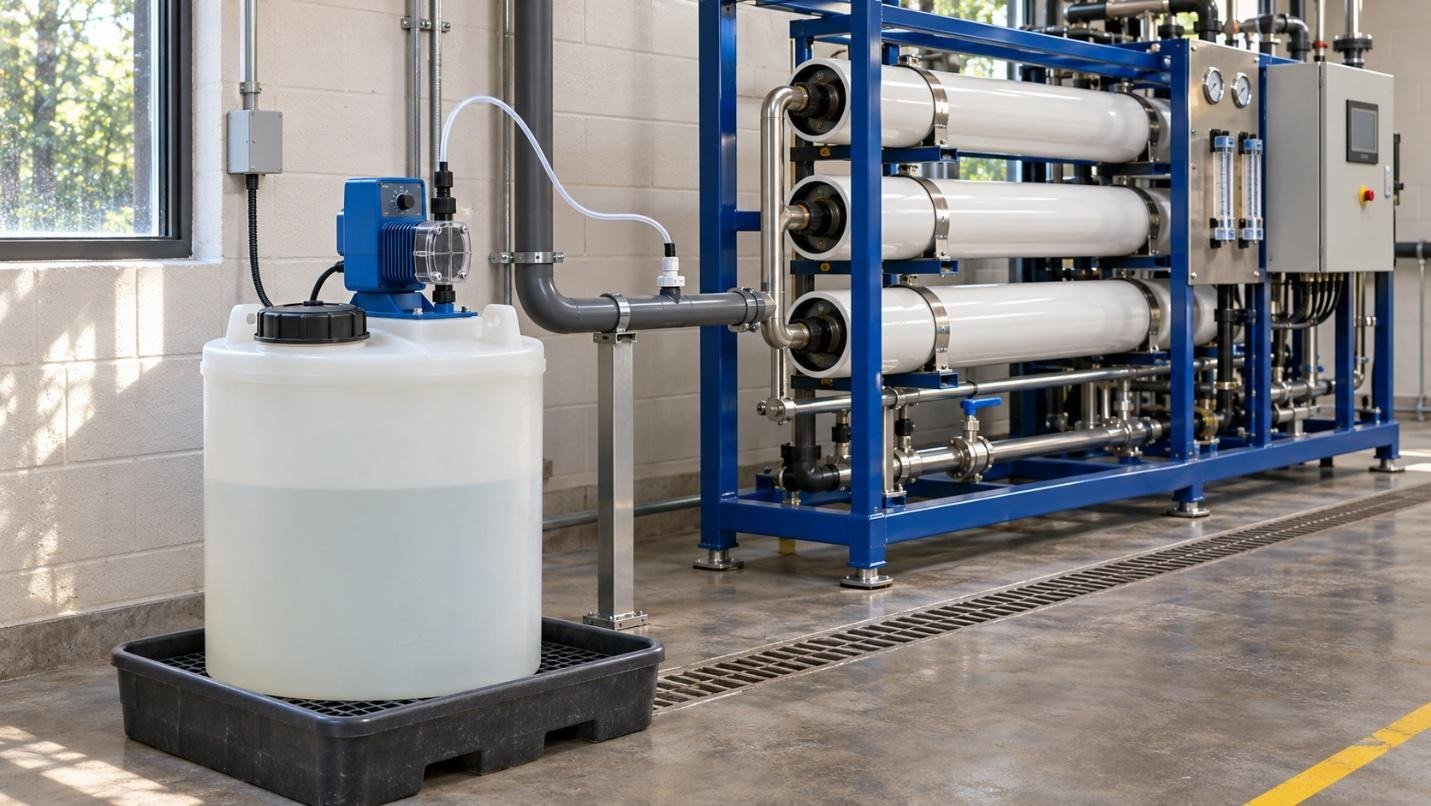
A dosing tank is a container that stores a treatment chemical, usually as a diluted solution, and feeds it to a dosing pump. The pump then injects the chemical into the water line at a controlled rate.
Most dosing tanks are made from polyethylene, a plastic that resists a wide range of acids, alkalis and oxidisers. They typically include:
- A removable lid to keep out dust and insects.
- Graduated markings so operators can see the level and estimate use.
- A flat top or bracket where the dosing pump can be mounted.
- Space for a mixer, suction line and low-level switch.
Common sizes range from about 50 litres for small systems to 1,000 litres or more for large plants. The right size depends on how much chemical the plant uses each day and how often someone can refill it.
Why RO Systems Need Chemical Dosing
RO membranes remove dissolved salts by pushing water through a very fine polymer layer. That layer is powerful but delicate. Three problems threaten it constantly:
- Scaling: as water passes through the membrane, salts become more concentrated on the feed side. Minerals such as calcium carbonate, calcium sulphate and silica can reach their limit and crystallise on the surface.
- Chlorine damage: most modern RO membranes, including those from DuPont FilmTec, Hydranautics and LG, use a polyamide layer that chlorine attacks. Even low levels over time can cause permanent damage.
- Biofouling: bacteria form a slimy biofilm on the membrane, raising pressure and lowering output.
Chemical dosing is one of the main ways to prevent all three. That makes dosing tanks, and the chemicals inside them, part of the membrane’s protection system.
Chemicals Commonly Stored in Dosing Tanks
Antiscalant
Antiscalant is the most common chemical in RO dosing. It interferes with crystal formation, letting minerals stay in solution even when concentrated. This allows the plant to run at higher recovery, producing more fresh water from the same feed, without scaling the membranes.
Dechlorination Chemicals
When feed water contains chlorine, a reducing agent such as sodium metabisulphite (SMBS) is dosed to neutralise it before the water reaches the membranes. Activated carbon filters can do the same job, but SMBS dosing is often used as a primary method or as a backup.
Disinfectants
Sodium hypochlorite may be dosed in the intake or pretreatment stages to control bacteria, then removed before the RO step. In some systems, non-oxidising biocides are dosed periodically to fight biofouling without harming the membranes.
pH Adjustment Chemicals
Acid can be dosed before RO to lower pH and reduce carbonate scaling. After RO, the permeate is often slightly acidic, so caustic soda or other chemicals may be added to raise pH and protect downstream pipes.
Cleaning Chemicals
Clean-in-place (CIP) systems use a separate, larger tank to mix acidic or alkaline cleaning solutions. These are circulated through the membranes when performance drops, removing scale or organic fouling.
How a Dosing Tank and Pump Work Together
In a typical setup, the tank holds a diluted chemical solution. A suction line, usually with a foot valve and strainer, draws solution from near the bottom of the tank into the dosing pump. The pump then injects a measured amount into the feed line through an injection valve.
Dosing pumps from brands such as Pentair can be set to deliver a fixed rate or to follow a signal. In more advanced plants, the pump speed follows a flow meter, so dosing rises and falls with the water flow. Online controllers, such as ORP and pH instruments from CREATE, can also be used to check that chlorine has been fully removed or that pH is on target.
A low-level switch in the tank is a simple but important addition. It stops the pump when the tank runs dry, preventing air locks and damage, and warns operators that a refill is due.
How a Water Treatment Equipment Supplier Sizes Dosing Tanks
Sizing a dosing tank comes down to a few basic numbers:
- The feed water flow rate to the RO system.
- The required dose of each chemical, usually in milligrams per litre.
- The strength of the solution in the tank.
- How many days the tank should last between refills.
For example, imagine an RO plant treating 10 cubic metres of water per hour, running 20 hours a day, with an antiscalant dose of 3 mg/L. That works out to roughly 600 grams of antiscalant per day. If the operator dilutes it to a 10% solution, the plant uses about 6 litres of solution daily, and a 100-litre tank lasts a little over two weeks.
An experienced water treatment equipment supplier will run these calculations for every chemical in the plant. Each one usually needs its own tank and pump, because mixing incompatible chemicals can be dangerous and can make them ineffective.
Where Dosing Fits in a Complete RO System
Dosing points are spread throughout a typical RO train:
- Intake: disinfectant to control biological growth.
- Media filters: coagulant, in some plants, to help multimedia filters in FRP vessels with valves from Clack or Runxin capture fine particles.
- Before cartridge filters: dechlorination chemical and antiscalant.
- High-pressure pumps and membranes: pumps from Danfoss and Ebara push the treated water into pressure vessels from brands such as BSK, where the membranes do their work.
- Post-treatment: pH correction and, often, a UV disinfection stage using units from Viqua.
Chemical-resistant piping and valves from GF are widely used to connect dosing lines, because standard metal fittings can corrode quickly. Accessories and components from brands such as Grace and iGlobal often complete the setup.
Getting the order right matters. Antiscalant should reach the water before it concentrates in the membranes, and dechlorination must be complete before water touches the polyamide layer.
Safety and Good Practice
Dosing chemicals can be hazardous, so safe storage is as important as accurate dosing:
- Label every tank with its contents and keep safety data sheets nearby.
- Use secondary containment, such as a bund or tray, to catch spills.
- Keep incompatible chemicals apart, especially acids and hypochlorite, which can release toxic chlorine gas if mixed.
- Wear protective equipment when mixing or refilling.
- Protect tanks from direct sunlight, which can degrade plastic and some chemicals.
- Clean tanks periodically to remove sediment and residue.
These habits protect people as well as equipment.
Questions to Ask a Dosing Tanks Supplier or RO System Supplier
When planning or upgrading a plant, it helps to involve both your dosing tanks supplier and your RO system supplier early, so the chemical system matches the membrane design. Useful questions include:
- Which chemicals does the membrane manufacturer recommend, and at what doses?
- Is the tank material compatible with each chemical and concentration?
- What tank size gives a practical refill interval for my operators?
- Can the dosing pump follow flow or a controller signal?
- Are low-level switches, mixers and suction lances included?
An experienced RO system supplier should also be able to explain how dosing affects recovery, cleaning frequency and membrane life. Residential, commercial and industrial RO units can have very different dosing needs, so the answer should always be specific to your system.
Conclusion
Dosing tanks may look simple, but they play a central role in keeping RO systems efficient and reliable. They store the antiscalants, dechlorination chemicals, disinfectants and pH adjusters that protect membranes from scale, chlorine and biofilm. Paired with accurate pumps and good monitoring, they help plants run longer between cleanings and get the most out of every membrane.
For anyone planning or running a plant, the best results come from treating dosing as part of the design, not an afterthought. Working with a knowledgeable dosing tanks supplier, a capable RO system supplier and an experienced water treatment equipment supplier helps ensure every chemical is stored safely and delivered at the right dose.
Frequently Asked Questions
What is the purpose of a dosing tank in an RO system?
A dosing tank stores a treatment chemical, such as antiscalant or dechlorination agent, and feeds it to a dosing pump. The pump injects it into the water to protect the RO membranes.
What chemicals are used in RO dosing?
The most common are antiscalant, sodium metabisulphite for dechlorination, disinfectants, and acids or alkalis for pH adjustment. Your RO system supplier can confirm which ones your membranes need.
How do I choose the right dosing tank size?
Calculate daily chemical use from your flow rate, dose and solution strength, then choose a tank that lasts a practical number of days between refills. A dosing tanks supplier can help with the calculation.
Can one dosing tank hold two chemicals?
No. Each chemical should have its own tank and pump. Mixing chemicals can make them ineffective and, in some cases, dangerous.
What should I ask a water treatment equipment supplier about dosing?
Ask how the dosing system will be sized, which chemicals are recommended, and how dosing will be controlled and monitored. A good water treatment equipment supplier will design dosing around your water analysis and membrane type.