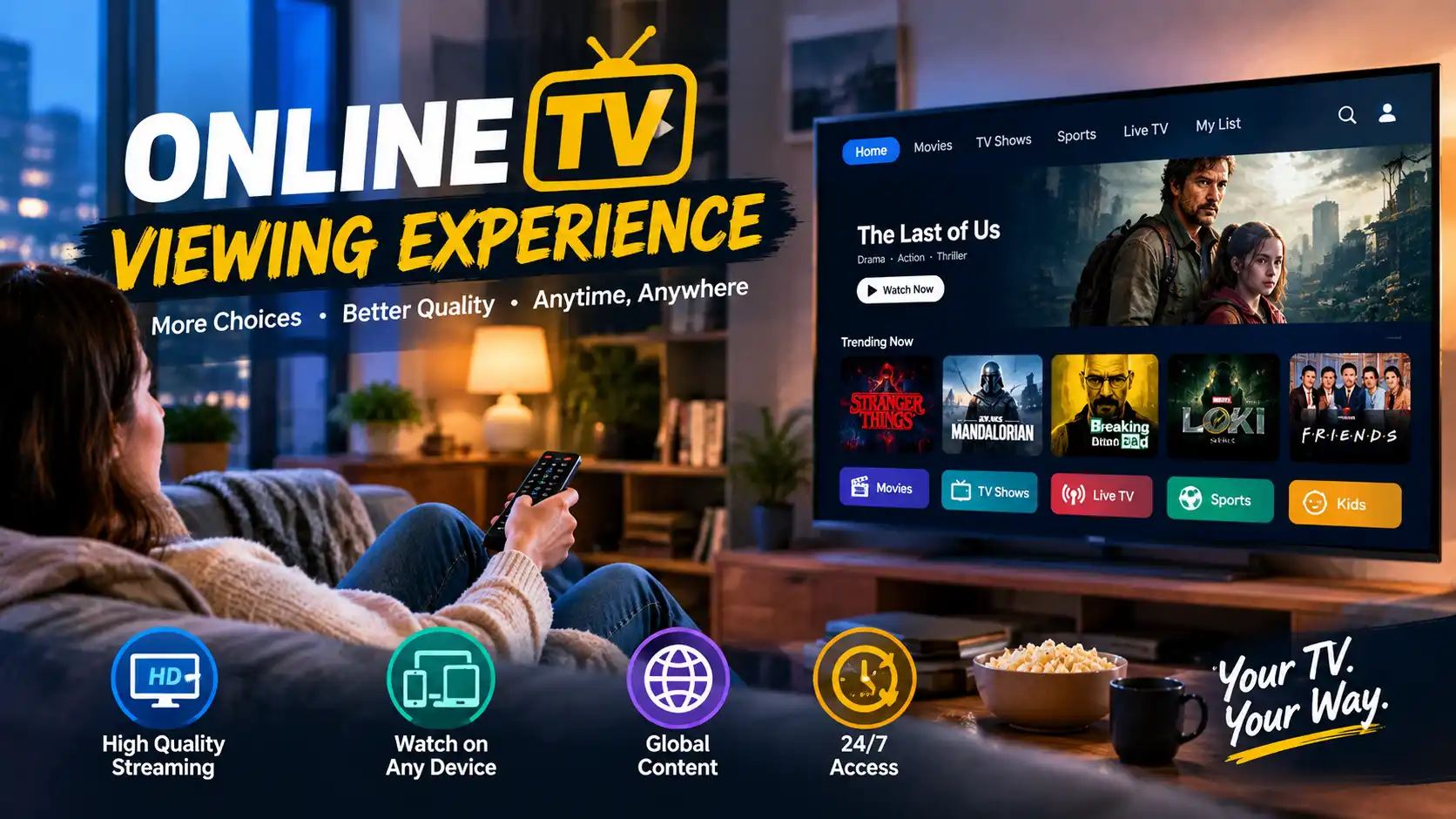
In my living room last Friday, I tried watching a big match with my dad, but the stream kept buffering. I said, “The screen froze again, right at the most important play, of course.” He laughed and replied, “Our internet gives up exactly when the drama starts, every single time.” I grabbed the remote and answered, “Then tonight we finally fix the setup instead of complaining at it.” We adjusted the router, the lighting, and the sound, step by careful step. I could not believe how much small changes improved the picture. Most of the improvement comes from small, practical fixes at home.
Start With a Reliable Internet Connection
A stable internet connection is one of the most important requirements for online video playback. When a connection becomes slow or inconsistent, viewers may experience buffering, interruptions, or lower video quality.
To improve connectivity, position your Wi-Fi router in a central location and reduce unnecessary obstacles between the router and your device. If several people are using the same network for gaming, downloads, or video calls, streaming performance may also be affected.
For devices located near a router, an Ethernet connection may provide a more consistent alternative to Wi-Fi. The ideal setup depends on your home network and the technical requirements of the streaming service.
Choose the Right Device for Watching TV
Different devices offer different advantages. A laptop provides a larger screen than most smartphones, while a smart television may create a more comfortable experience for watching programs with family members.
Smartphones are useful for portable viewing, but their battery life, screen size, and mobile data usage should be considered. Tablets can provide a middle ground between portability and screen comfort.
Before using an online television platform, check its compatibility with your device. Some services work through a browser, whereas others may require a supported application or additional hardware.
Keep Your Browser and Software Updated
Outdated software can sometimes cause compatibility problems with modern websites and video players. Installing browser updates helps maintain security and can improve support for current web technologies.
Users should also update their device operating systems when appropriate. These updates may include security improvements, bug fixes, and performance enhancements.
If a video player fails to load, try refreshing the page or reopening the browser. Clearing cached website data may help in certain situations, although doing so can sign you out of websites or remove saved preferences.
Avoid installing unfamiliar extensions or downloading unverified applications simply to fix a streaming problem.
Reduce Common Streaming Interruptions
Buffering can happen for several reasons, including network congestion, weak Wi-Fi signals, device limitations, or problems with the streaming service itself.
Start by checking whether other websites load normally. If your connection appears slow, pause large downloads and disconnect devices that are using unnecessary bandwidth.
You can also restart your router and close applications that consume significant system resources. If the problem continues across different devices, the issue may involve your internet provider or the streaming service.
Changing video quality settings, when available, may also help if your connection cannot consistently support higher resolutions.
Protect Your Privacy While Watching Online
Online safety deserves attention whenever you visit an unfamiliar entertainment website. Some websites use aggressive advertisements, deceptive download buttons, or misleading messages that encourage users to install unwanted software.
Stick to trusted sources and review a platform’s privacy policy and terms of use. Be cautious if a website requests sensitive information that does not appear necessary for its service.
Never enter payment details on an unverified page, and avoid sharing account credentials through unfamiliar pop-ups. Keeping security software and your browser updated can provide additional protection.
Choosing platforms that have the appropriate rights to distribute their content is equally important. Channel availability and viewing permissions may differ across countries.
Create a Comfortable Viewing Environment
Good viewing habits can make online television more enjoyable. Adjust the screen brightness to suit the surrounding lighting and position your device at a comfortable distance.
For longer viewing sessions, take regular breaks and avoid holding a phone in an uncomfortable position for extended periods. If you watch television in a shared space, headphones can help reduce noise for other people.
These small adjustments can make entertainment more comfortable without requiring expensive equipment.
Key Takeaways
- Start with the connection. A stable connection matters more than a fast headline speed.
- Fix picture first with presets. A Movie or Cinema preset beats the bright factory preset for most shows and films.
- Sound is half the experience. Clear dialogue settings or a simple soundbar can matter more than a bigger screen.
- Control the room. Lower glare, soften bright lights, and sit at a comfortable distance and angle.
- Match quality to your connection. A steady lower resolution looks better than a stuttering higher one.
Start With a Stable Internet Connection
Streaming quality begins with the connection, not with the TV. Online video needs a steady flow of data. When that flow breaks up, the picture drops in quality, the sound stutters, or the stream pauses to buffer. A connection that is fast but unstable can feel worse than a slower connection that stays steady.
Place your router in a central, open spot, away from thick walls, large metal objects, and other electronics that can block the signal. Keep the router off the floor and away from closed cabinets. If the TV sits far from the router, the Wi-Fi signal has further to travel and more obstacles to cross, which raises the chance of buffering.
Reduce competition for bandwidth while you watch. Large downloads, cloud backups, game updates, and video calls on other devices all draw from the same connection. Pause them during a film or a live event when possible. If your router offers separate wireless bands, a 5 GHz band often gives faster speeds at short range, while a 2.4 GHz band reaches further through walls. Try each band near your TV and keep the one that stays steadier.
Set Up Your Device: Placement, Cables, and Connections
Good placement starts with eye level. The center of the screen should sit near eye level when you are seated in your normal viewing spot. A screen mounted too high strains the neck. A screen sitting too low forces you to look down for hours. A TV stand, a wall mount, or a simple riser can fix the height without a full room redesign.
Picture Settings That Actually Help
Most TVs ship with a bright, oversaturated factory preset designed to stand out in a store. That preset often looks harsh at home. Switching to a Movie, Cinema, or Filmmaker preset usually gives a more natural picture right away, with calmer colors, softer whites, and better shadow detail. Try that preset first, then adjust from there.
Learn the four core controls:
- Brightness: controls how light or dark the dark parts of the picture look. Raise it until shadow detail appears, then stop before blacks turn gray and washed out.
- Contrast: controls the gap between bright and dark areas. Raise it until whites look clean and bright, then stop before bright detail disappears into pure white.
- Color: controls how strong colors look. Raise it until skin tones look natural, then stop before faces turn orange or red.
- Sharpness: controls edge detail. Keep it low or near the middle. High sharpness adds artificial outlines and noise, especially on compressed streams.
If your TV and content support HDR, which stands for High Dynamic Range, it can improve contrast and color in bright and dark scenes. HDR needs the right input, the right cable, and the right settings to work well. If HDR content looks dull, gray, or washed out, check that the TV input has HDR enabled, that the streaming app is set to the highest quality, and that the picture preset for HDR is set to a Movie or Cinema style preset. If the problem continues, a standard picture may look better than a broken HDR picture on that setup.
Sound: Dialogue, Speakers, and Headphones
Sound is half the experience, yet many viewers leave it on defaults. TV speakers are small and often point downward or backward, so dialogue can sound thin or buried under music and effects. Start with the sound preset. Many TVs offer a Clear Voice, Dialogue, or Night Mode setting that lifts speech above background sound. For evening viewing, a night mode also evens out loud and quiet moments, so action scenes do not blast while whispers vanish.
A soundbar is the simplest upgrade for most rooms. It sits under or in front of the TV, connects with one cable, and gives fuller dialogue and deeper sound than built-in speakers. Place it centered under the screen, with nothing blocking the front. If you want more bass, add a subwoofer only if your room can handle it without shaking nearby furniture.
Lighting and Room Setup
Lighting changes how good a picture looks, even when the TV settings stay the same. Bright light falling on the screen washes out dark scenes and creates reflections that pull your eyes away from the story. The fix is simple: reduce light that hits the screen directly.
- Avoid placing the TV opposite a window or a bright lamp. Move the lamp, shift the TV angle, or close curtains during daytime viewing.
- Use soft, indirect light behind or beside the seating area instead of a bright overhead light above the screen.
- Try a bias light, which is a soft light strip placed behind the TV. It reduces eye strain in a dark room without washing out the picture.
- Dim the room for films, but do not watch in total darkness for hours. A low, steady light is easier on the eyes.
Seating and Comfort
Comfort decides how long you can enjoy a show. Sit directly in front of the screen when possible, because most TVs lose color and contrast at wide angles. If family seating spreads across a wide sofa, angle the TV slightly toward the center of the seating area so side seats still see a fair picture.
Support your back, neck, and arms. A chair or sofa that holds your back upright, with feet flat on the floor and arms resting comfortably, beats a deep slouch that leaves your neck stiff after one episode. Keep the remote, a drink, and any snacks within reach so you do not twist or stretch repeatedly.
Take regular breaks. Stand, stretch, look away from the screen, and walk for a minute between episodes. For long films, pause at a natural break and move around. Breaks reduce eye strain, neck stiffness, and the tired feeling that makes the last part of a long session feel like a chore.
Streaming Quality Settings and Data Use
Many streaming apps choose quality automatically based on your connection. That automatic choice is usually sensible, but checking the settings can still help. Look in the app for video quality, playback quality, or data usage settings. If the app is set to a data-saving mode, it may cap the picture at a low resolution even when your connection could handle more. Switch it to the highest quality or automatic option when you want the best picture.
Keep Apps, Browser, and Software Updated
Outdated software causes a surprising share of playback problems. Updates fix bugs, patch security issues, and add support for newer video formats. Keep your TV software, streaming device software, streaming apps, browser, and device operating system up to date.
Troubleshooting Common Playback Problems
Most streaming problems come from a small set of causes. Work through them in order instead of changing many settings at once.
| Problem | Likely Cause | Try First |
|---|---|---|
| Buffering or pausing | Unstable connection or crowded network | Pause other downloads, move closer to the router, or switch to a wired connection |
| Low or soft picture | Quality capped by app or weak connection | Check app quality settings, then test the connection |
| No sound | Wrong output or muted device | Check TV volume, app volume, and sound output setting |
| Sound out of sync | Player or device delay | Restart the app, then restart the device |
| Picture and sound out of sync on external speakers | Audio delay in the sound system | Look for a lip-sync or audio delay setting on the TV or soundbar |
| Player will not load | Outdated app or browser, or cached data problem | Update the app or browser, then clear app cache or browser cache for that site |
| Black screen with sound | Loose cable or display problem | Check the HDMI cable and input, then restart the TV |
| App crashes | Low memory or a buggy update | Close other apps, restart the device, then reinstall the app if needed |
Privacy and Safety While Watching Online
Online TV should be enjoyable and safe. Use trusted services and official apps whenever possible. Services that hold proper rights to their content are more likely to offer stable quality, working apps, and honest privacy terms. Unofficial sites often rely on aggressive ads, deceptive download buttons, and misleading pop-ups that push unwanted software.
Protect your accounts. Use a strong, unique password for each streaming account, and turn on any sign-in verification the service offers. Never enter payment details on a page that looks unfamiliar, and never share account codes through pop-ups or messages that claim your account is locked. Sign out on shared or borrowed devices when you finish.
Frequently Asked Questions
Why does my online TV keep buffering?
Buffering usually means the connection is unstable or crowded. Pause downloads and video calls on other devices, move closer to the router, try a wired connection, or lower the streaming quality by one step. If every device buffers at the same time, the problem may sit with the internet provider or the streaming service, and waiting a short time often helps.
Why does my picture look dull or washed out?
A dull picture often comes from a bright factory preset, strong room light falling on the screen, or an HDR setting that does not match your setup. Switch to a Movie or Cinema preset, reduce direct light on the screen, and check that HDR is enabled on the correct input. If HDR still looks gray, a standard picture may look better on that setup.
Why is dialogue hard to hear?
Dialogue gets buried when TV speakers are small, when music and effects are louder than speech, or when the sound output points to the wrong device. Turn on a Clear Voice or Dialogue setting, try Night Mode, check the sound output, or use a soundbar or headphones. Soft furnishings such as rugs and curtains can also reduce echo that blurs speech.
Should I watch in 4K or 1080p?
Pick the option that stays steady. 4K can look sharper when the screen, the app, and the connection all support it. If 4K keeps dropping in quality or buffering, a steady 1080p stream will look better in practice. Check that the app quality setting is not locked to a data-saving mode before you decide.
Does a bigger TV always give a better experience?
No. A bigger TV helps only when the seating distance fits the screen. Too large a screen for a short distance forces constant eye movement. Too small a screen for a long distance makes detail hard to see. Choose a size that lets you see the whole screen without turning your head, with menu text still readable from your seat.
How often should I update my streaming apps?
Update them whenever a new version is available. Updates fix playback bugs, patch security issues, and add support for newer video formats. Turn on automatic updates where the device offers them, and restart the device after a major update.
Conclusion
A better online TV experience begins with a reliable connection, a compatible device, and a trustworthy streaming platform. Keeping software updated, troubleshooting network issues, and protecting personal information can also help prevent common problems.
As digital entertainment continues to develop, viewers have more options for watching programs on their own terms. By paying attention to performance, security, and content availability, anyone can make more informed decisions about online television services.