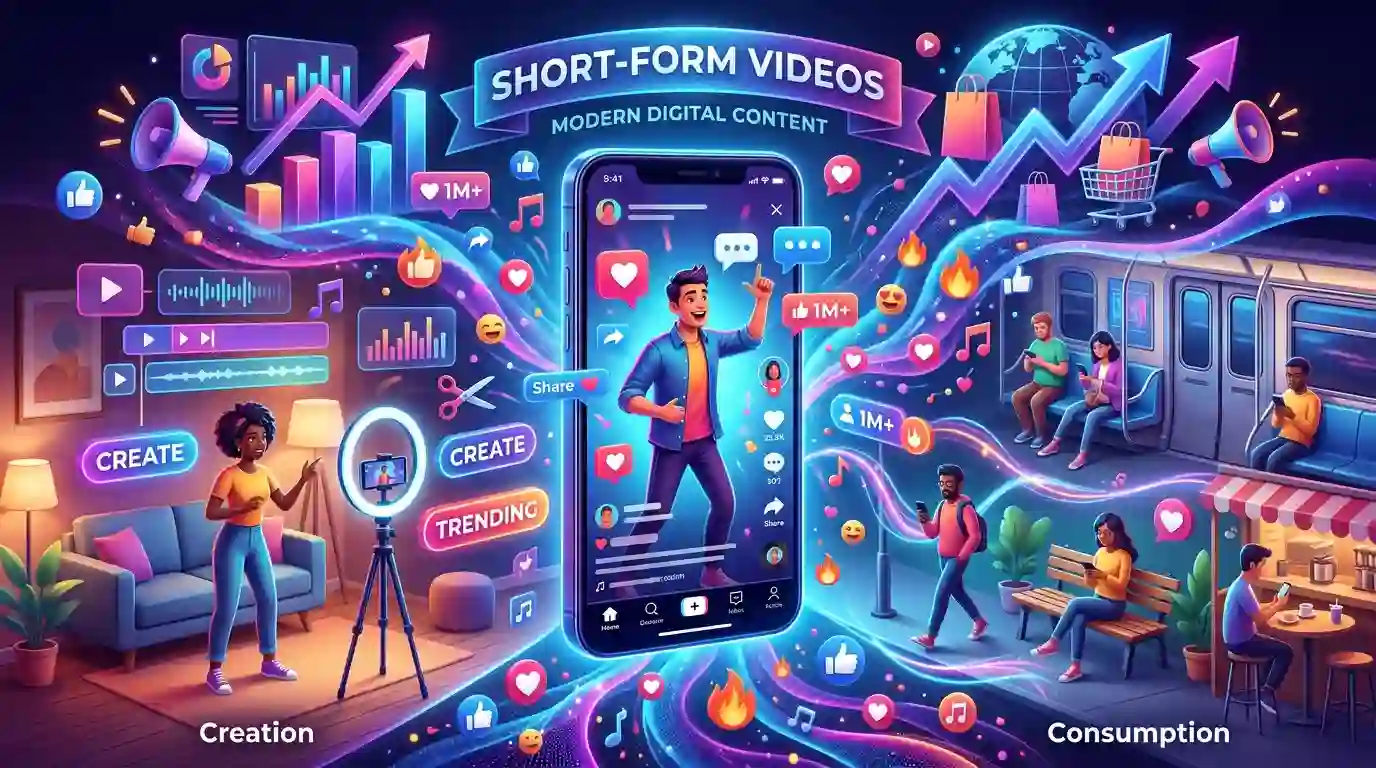
During a short train ride downtown, I watched my teenage cousin Zara scroll through quick clips the whole journey. I said, “You learned a recipe, a dance, and a history fact before our stop.” She laughed and replied, “Short videos teach faster than my textbooks, and they never feel like homework.” I smiled and answered, “They fit busy days, but they also steal hours without asking permission.” We debated creators, trends, and attention spans until the doors opened. I kept thinking about how completely these clips reshaped our habits. These videos deliver ideas in a format that fits busy schedules.
Why Short Videos Are So Popular
One reason for the popularity of short-form content is its accessibility. Viewers can learn a basic cooking technique, discover a travel destination, or watch a quick software tutorial without committing to a long video.
The format also encourages creativity. Creators often rely on concise storytelling, clear visuals, music, captions, and engaging introductions to communicate their ideas. Businesses use similar techniques to introduce products, answer customer questions, and demonstrate how their services work.
Because new videos appear constantly, users may want to organize or revisit content that provides lasting value. This is especially useful for tutorials, creative references, and demonstrations that would otherwise be difficult to locate again.
Using Saved Videos for Personal Projects
Downloaded videos can be useful when they are handled appropriately. For example, someone learning video editing might keep an authorized reference clip to study transitions, framing, or pacing. A creator may also save a personal backup of an original upload for future editing.
Students and researchers sometimes use publicly available videos as examples when studying online communication or digital trends. In these situations, keeping accurate notes about the source and creator can help maintain context.
It is important to distinguish between using a video as a personal reference and incorporating it into a new publication. A downloaded file should not be treated as unrestricted material simply because it can be saved.
What to Look for in a Video-Saving Tool
With many online tools available, choosing one requires more than looking for a prominent download button. A good user experience depends on clarity, compatibility, and transparent handling of information.
Consider the following features when evaluating a service:
Simple browser access: A website that works in a modern browser can save users from installing an extra application.
Supported download formats: MP4 is commonly used for video playback, while MP3 is suitable when an audio-only option is available and appropriate.
Quality choices: The available resolution should be clearly explained. The actual result depends on the source video and the service’s capabilities.
Mobile compatibility: Smartphone users should be able to navigate the interface and locate saved files without unnecessary difficulty.
Clear privacy information: Users should understand what information is processed, whether files are stored, and how the service handles their requests.
Reviewing these points can make it easier to identify a tool that fits your requirements.
A Simple Workflow for Saving TikTok Content
Start by opening TikTok and finding a public video that you own or have permission to download. Copy its URL using the platform’s sharing options.
Open a compatible online downloader in your browser and paste the link into its input box. Submit the URL and wait for the service to identify the available content. If processing succeeds, select one of the offered download options and save the file.
Once the download finishes, check the file in your device’s Downloads folder or the location configured in your browser. You can then organize it into a suitable folder for personal reference.
If the tool cannot process the link, the post may be unavailable, restricted, or unsupported. Avoid entering account passwords or installing unknown extensions simply to complete a download.
Responsible Content Management Matters
The convenience of saving videos comes with a responsibility to respect the people who create them. A public post is not automatically free to reproduce, redistribute, or use commercially.
Before reusing downloaded content in a blog post, marketing campaign, compilation, or social media upload, check the creator’s permissions and any applicable licensing terms. Giving credit is good practice, but credit alone does not replace permission when permission is required.
Creators should also consider keeping original project files and personal backups of their own work. This makes it easier to update videos, adapt them for different platforms, and recover content if a device or account becomes unavailable.
Looking Ahead
Short-form video will continue to play an important role in entertainment, education, and digital communication. As viewing habits evolve, users will keep looking for practical ways to organize useful content and access it across their devices.
A reliable workflow combines an easy-to-use tool, sensible file organization, attention to privacy, and respect for copyright. With these principles in mind, viewers and creators can make better use of short-form videos while protecting the work and rights of the people behind them.
How Short Videos Changed the Way We Watch
Short videos changed viewing from an evening activity into something that fits into spare minutes. People now watch while waiting for a bus, during a lunch break, or between tasks. This shift rewarded creators who could make a clear point fast, and it turned phones into the main screen for millions of viewers.
The change also altered what gets discovered. A viewer who would never search for a long documentary might watch a sixty second clip on the same topic and then want more. Short videos act as a doorway, introducing new interests, creators and ideas in a format that asks very little of the viewer upfront.
Short Videos as a Way to Learn New Skills
Short videos are surprisingly good teachers for practical skills. A quick clip can show a knife technique, a language phrase, a workout move or a simple repair far more clearly than a written description. Watching the action once is often enough to try it yourself, and you can replay the tricky part as many times as needed.
The trick is to follow creators who teach step by step rather than those who only show off results. Save the lessons that worked for you, practise soon after watching, and build a small collection of reliable teachers. Used this way, a few minutes of scrolling becomes genuine learning instead of empty entertainment.
What Makes a Short Video Worth Saving
Not every video deserves a place in your saved list. A video is worth saving when you can picture yourself returning to it, whether for a recipe you will cook, a workout you will repeat, or an idea you will use at work. If you cannot name the reason to keep it, the video is probably just a moment of fun, and letting it go keeps your collection useful.
Quality matters too. Save videos with clear sound, steady visuals and honest information, and skip clips that feel rushed or misleading. A small, well chosen collection you actually revisit beats a huge saved list you never open, and it makes the time you spent finding those videos pay off again and again.
Organising Saved Videos Into Simple Collections
A saved list grows messy fast unless you organise it early. Most apps let you sort saved videos into collections or playlists, so create a few broad ones such as cooking, fitness, travel ideas and work tips. Sorting takes seconds at the moment you save, and it saves much longer searches later.
Review your collections every month or so and remove videos that no longer feel useful. Tastes change, skills improve, and some clips go out of date. A short regular tidy keeps your collections fresh, and it means the video you need is always a couple of taps away instead of buried under hundreds of forgotten saves.
Short Videos and Healthy Screen Time Habits
Short videos are designed to keep you watching one more clip, so a little structure helps. Decide before you open an app whether you are watching to learn, to relax, or to catch up with favourite creators, and set a rough time limit for the session. A timer or a simple alarm can break the scroll loop without any willpower battle.
Balance matters more than strict rules. Short videos can be a fine break between tasks, but they should not replace sleep, movement or time with people. If you notice yourself scrolling past the point of enjoyment, put the phone down and do something else. The videos will still be there tomorrow, and they will feel fresher after a break.
Sharing Saved Videos While Respecting Creators
Sharing a great video is one of the best ways to support its creator, but how you share matters. Send the original link or use the app share button so the creator gets the credit and the views. Downloading a clip and reposting it as your own strips away that credit, even when you mean well.
When you share, add a short note about why you liked it. A personal recommendation helps friends decide whether to watch, and it shows the creator that their work landed with a real person. Respectful sharing keeps the short video world healthy, rewarding the people who make the content everyone enjoys.
Where Short-Form Video Is Heading Next
Short-form video keeps evolving. Clips are getting slightly longer, search inside video apps is improving, and creators are building full series instead of one-off posts. Shopping features, live sessions and interactive polls are turning short videos from quick entertainment into a richer mix of learning, buying and community.
For viewers, the change means more choice and more control. Better search will make it easier to find exactly the clip you need, and better collections will make saving feel worthwhile. The format that started as a quick distraction is growing into a lasting part of how people learn, shop and stay connected every day.