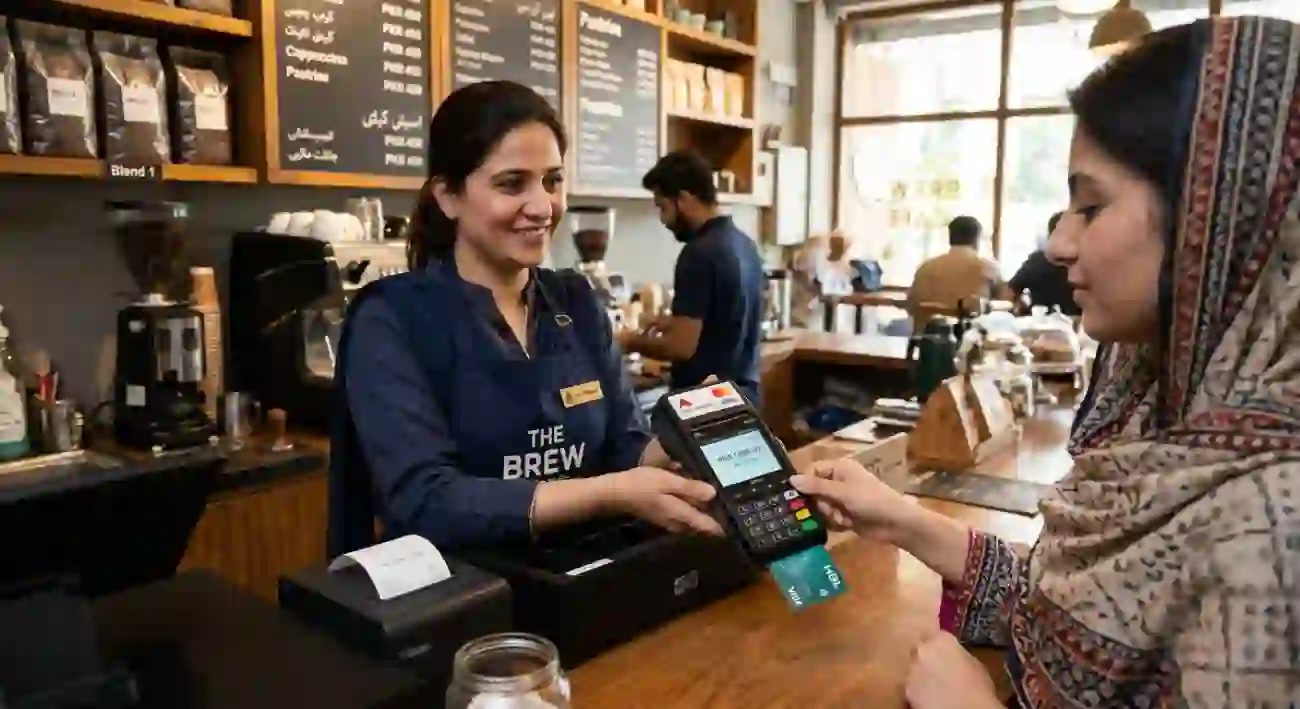
A credit card machine for business lets you accept payments from customers using credit cards, debit cards, and often digital wallets.
Depending on your needs, you can choose a countertop terminal, wireless card reader, mobile payment device, or complete point-of-sale (POS) system. Compare processing fees, payment methods, security features, and hardware costs before choosing one.
Key Takeaways
- Credit card machines help businesses accept card and digital wallet payments quickly and securely.
- Countertop, wireless, mobile, and POS systems serve different business needs.
- Processing fees, hardware costs, and monthly charges affect your total expenses.
- EMV chip technology, contactless payments, and secure processing help protect transactions.
- The best machine depends on your business size, sales volume, location, and payment preferences.
Credit Card Machine for Business
Choosing the right credit card machine for business can make checkout easier, help you serve customers faster, and give your business more ways to accept payments. Whether you own a small retail store, restaurant, salon, food truck, or service company, the right payment equipment can support your daily operations.
However, not every machine offers the same features or pricing. Some devices work best at a fixed checkout counter, while others allow you to accept payments at a customer’s table, home, or outdoor event.
You also need to consider processing fees, hardware costs, payment security, and compatibility with your existing business tools. A machine with a low purchase price may cost more over time if it includes expensive transaction fees or monthly charges.
This guide explains how business credit card machines work, compares the main types, and highlights the costs and features to review before buying. You’ll also learn how to choose a payment solution that fits your business without paying for features you don’t need.
What Does “Credit Card Machine for Business” Mean?
A credit card machine for business is a payment device that allows merchants to accept credit and debit card payments. Many modern terminals also support contactless cards, smartphone wallets, and other electronic payment methods.
When a customer pays, the machine securely sends transaction information through a payment processor for authorization. If the transaction is approved, the payment can proceed, with the funds typically deposited into the business’s designated account according to the provider’s settlement schedule.
Businesses commonly use these machines in retail stores, restaurants, medical offices, salons, hotels, and mobile service operations.
Some devices operate independently, while others connect to a register, tablet, smartphone, or complete POS system. The best choice depends on how and where you serve customers.
Why Use a Credit Card Machine for Business?
Accepting electronic payments gives customers more flexibility and can simplify checkout. It also helps businesses meet common payment preferences without relying entirely on cash.
Here are several benefits:
- More payment options: Accept eligible credit cards, debit cards, and digital wallets.
- Faster checkout: Reduce the time spent counting cash and making change.
- Better customer experience: Give customers a familiar, convenient way to pay.
- Improved recordkeeping: Track electronic transactions through your payment system.
- Flexible selling options: Accept payments at a counter, on the go, or at a customer’s location.
- Easier business management: Connect compatible payment equipment with inventory, sales reports, and accounting tools.
Keep in mind that a credit card machine does not guarantee higher sales. Its value depends on customer demand, your pricing, the cost of processing, and how well the device fits your workflow.
10 Best Types of Credit Card Machines for Business
The following are ten practical payment machine options or configurations. They are not all separate products; some combine hardware with software and payment processing.
1. Countertop Credit Card Terminal
Meaning
A countertop terminal stays at a fixed checkout location and connects through an internet connection or phone line, depending on the model. It typically supports chip cards and may include contactless payment features.
Best For: Professional, Formal
Example 1:
A neighborhood grocery store uses a countertop terminal to process payments at its main register.
Example 2:
A dental office keeps a dedicated card terminal at the reception desk for patient payments.
Quick Tip:
Check whether the terminal supports your preferred connection type and payment methods before purchasing.
2. Wireless Credit Card Terminal
Meaning
A wireless terminal lets employees accept payments away from a fixed checkout counter. Depending on the device, it may use Wi-Fi or cellular connectivity.
Best For: Professional, Polite
Example 1: A restaurant server brings a wireless terminal to the customer’s table.
Example 2:
A boutique owner accepts payment while helping a customer in another part of the store.
Quick Tip:
Confirm the device’s network coverage, battery life, and roaming capabilities.
3. Mobile Credit Card Reader
Meaning
A mobile card reader connects to a compatible smartphone or tablet, often through Bluetooth or another supported connection. The accompanying app helps process transactions and review sales.
Best For: Casual, Friendly
Example 1:
A freelance photographer accepts card payments after delivering printed photos at an event.
Example 2: A personal trainer collects payment from clients after outdoor training sessions.
Quick Tip:
Review app compatibility, transaction fees, and any required phone or tablet specifications.
4. Handheld Payment Terminal
Meaning
A handheld terminal combines payment processing with a portable screen and built-in controls. Some models also support receipts, staff accounts, and basic sales management.
Best For: Professional, Polite
Example 1:
A food truck employee processes payments from customers standing outside the vehicle.
Example 2:
A repair technician uses a handheld terminal to collect payment after completing a job.
Quick Tip:
Choose a model with enough battery capacity to last through your busiest working hours.
5. Smart POS Terminal
Meaning
A smart POS terminal combines card acceptance with software that may support sales reports, product catalogs, employee permissions, and other business tasks. Available features vary by provider.
Best For: Professional, Formal
Example 1:
A clothing store uses a smart POS terminal to record sales and monitor selected inventory.
Example 2:
A growing salon uses a connected terminal to manage payments and employee checkout activity.
Quick Tip:
Make sure the software includes the functions you actually need and check whether advanced features require extra fees.
6. Tablet-Based POS System
Meaning
A tablet-based POS system uses a tablet as the main checkout interface and connects it to compatible payment hardware. It can combine sales management, inventory tools, and transaction processing.
Best For: Professional, Friendly
Example 1:
A small gift shop uses a tablet POS system to manage product sales and accept card payments.
Example 2:
A pop-up clothing business sets up a tablet checkout station at weekend markets.
Quick Tip:
Check the cost of the tablet, card reader, software subscription, and accessories together.
7. Contactless Payment Terminal
Meaning
A contactless terminal accepts supported tap-to-pay cards and digital wallets using near-field communication (NFC). Customers can complete eligible transactions by tapping their payment method near the reader.
Best For:
Professional, Casual
Example 1: A coffee shop accepts contactless payments during the morning rush.
Example 2:
A convenience store lets customers tap compatible cards or smartphones at checkout.
Quick Tip:
Verify that the terminal supports the contactless payment methods your customers commonly use.
8. POS Register With an Integrated Card Reader
Meaning
An integrated POS register combines checkout software and payment hardware in one connected setup. Depending on the system, it may also support barcode scanning, receipts, inventory tracking, and sales reports.
Best For: Professional, Formal
Example 1:
A hardware store uses an integrated register to process purchases and track product sales.
Example 2:
A bakery connects its payment terminal with its register to simplify daily reconciliation.
Quick Tip:
Confirm that the payment system integrates with your accounting, inventory, and reporting tools.
9. Portable Payment Terminal With Receipt Printer
Meaning
This type of terminal includes a built-in printer or another compact receipt-printing solution. It can be useful when customers need a printed record of payment.
Best For: Professional, Polite
Example 1:
A catering company prints receipts for customers paying at private events.
Example 2:
A market vendor provides printed receipts to shoppers who request them.
Quick Tip:
Compare printer paper costs, battery performance, and receipt customization options.
10. All-in-One Payment System
Meaning
An all-in-one payment system combines compatible hardware, payment processing, and business software under one provider or connected platform. It may include checkout tools, transaction reporting, and customer management.
Best For: Professional, Friendly
Example 1:
A new retail business chooses one platform for its terminal, sales reports, and basic inventory tools.
Example 2:
A growing restaurant adopts a connected payment system to coordinate checkout and reporting.
Quick Tip:
Read the service agreement carefully to understand processing rates, software fees, contract terms, and equipment restrictions.
Comparison Table
| Alternative | Best Used In | Tone |
|---|---|---|
| Countertop credit card terminal | Fixed checkout counters | Professional |
| Wireless credit card terminal | Restaurants and larger stores | Polite |
| Mobile credit card reader | Freelancers and small businesses | Casual |
| Handheld payment terminal | Food trucks and field services | Professional |
| Smart POS terminal | Retail stores and salons | Professional |
| Tablet-based POS system | Pop-ups and small shops | Friendly |
| Contactless payment terminal | Busy retail and food businesses | Casual |
| Integrated POS register | Established retail operations | Formal |
| Terminal with receipt printer | Markets and service businesses | Polite |
| All-in-one payment system | Businesses wanting connected tools | Friendly |
How Much Does a Credit Card Machine for Business Cost?
The total cost depends on the hardware, payment provider, transaction volume, and services you choose. Some providers offer inexpensive card readers, while advanced terminals and complete POS systems can require a larger upfront investment.
Your main expenses may include:
- Hardware: The purchase or rental price of the terminal, reader, or register.
- Transaction fees: Charges assessed when you accept and process payments.
- Monthly fees: Software, account, support, or payment service charges.
- Connectivity: Internet access, cellular service, or related equipment.
- Additional services: Receipt printers, inventory tools, integrations, or chargeback support.
Payment processors may use flat-rate pricing, interchange-plus pricing, or other fee structures. Actual rates vary, so request a written quote based on your expected sales volume and average transaction size.
For a fair comparison, calculate your estimated monthly cost rather than focusing only on the advertised machine price.
Common Mistakes When Choosing a Business Credit Card Machine
1. Choosing Only by Hardware Price
An inexpensive reader may have higher processing costs or require a paid subscription. Compare the full cost of ownership before deciding.
2. Ignoring Transaction Fees
Even small differences in processing rates can add up as sales increase. Review percentage fees, per-transaction charges, and any additional assessment or service fees.
3. Buying Incompatible Equipment
Some terminals only work with specific processors or software platforms. Confirm compatibility before purchasing or signing a service agreement.
4. Overlooking Payment Security
Use reputable providers and equipment that support current security requirements. Ask about EMV chip acceptance, encryption, PCI DSS responsibilities, software updates, and how payment data is handled.
5. Paying for Unnecessary Features
A simple mobile reader may be enough for a freelancer, while a retailer may need inventory tracking and multiple employee accounts. Match your equipment to your actual workflow.
Frequently Asked Questions
1. What is the best credit card machine for a small business?
The best option depends on how you operate. A mobile reader may suit a freelancer or home-based business, while a countertop terminal works well for a fixed store. Businesses that need inventory management, employee access, and sales reports may benefit from a POS system with integrated payment processing.
2. Can I get a credit card machine for my business without a monthly fee?
Yes, some providers offer payment equipment or processing plans without a recurring monthly charge. However, you may still pay transaction fees, hardware costs, or other service charges. Compare the complete pricing structure, including any minimums, account fees, and conditions attached to the offer.
3. Do I need a business bank account to accept credit card payments?
Payment providers generally require an eligible account for settling your sales proceeds, and a business bank account is often the most practical choice. Specific requirements depend on the provider and your business structure. Confirm the documentation and account requirements before applying for payment processing.
4. Can a credit card machine accept debit cards?
Most modern business terminals accept supported debit cards as well as credit cards. The customer may insert a chip, tap a contactless card, or use another supported method. However, acceptance depends on the terminal, processor, card network, and payment configuration, so check compatibility before buying.
5. What fees should I expect when using a credit card machine?
Common charges include transaction percentage fees, per-transaction fees, monthly service fees, hardware costs, and sometimes chargeback or payment network-related fees. The exact amounts depend on the provider and pricing plan. Ask for a complete fee schedule and estimate your costs using realistic monthly sales figures.
6. Is a wireless credit card machine better than a countertop terminal?
A wireless terminal is useful when you need to take payments at tables, events, or customer locations. A countertop model may be simpler and more economical for a fixed checkout. Neither is universally better; your choice should reflect mobility requirements, connection reliability, and operating costs.
7. Are credit card machines safe for small businesses?
They can support secure payments when used with reputable providers and properly maintained equipment. Look for EMV chip and contactless support, secure data handling, regular updates, and clear guidance on PCI DSS requirements. Avoid storing sensitive card details unnecessarily, and train employees to recognize suspicious transactions.
8. How do I choose a credit card processing company?
Compare transaction rates, contract terms, settlement times, customer support, hardware compatibility, and integration options. Check whether the provider charges cancellation fees or requires proprietary equipment. Read the agreement before signing, and ask for a written estimate based on your business’s average transaction value and monthly card sales.
Countertop vs Mobile vs Smart Terminal: Which Fits Your Business
Countertop terminals suit fixed locations such as shops and salons, where the machine stays beside the till and connects by broadband or phone line. Mobile terminals use a cellular or Wi-Fi connection, making them ideal for restaurants with table service, market stalls, and tradespeople who take payment at the customer door.
Smart terminals run apps on a touchscreen and can combine payments with inventory, staff management, and customer receipts. They cost more, but for a growing business they can replace several separate tools. Choose based on where you actually take payments, not on features you will never use.
Card Machine Fees Explained
- Transaction fees: A percentage of each sale, plus sometimes a small fixed amount, which varies by card type and provider.
- Monthly rental or service charges: A fixed fee for the terminal and the payment service, which may be waived above a certain sales volume.
- Setup and extras: One-time costs for delivery, configuration, receipt rolls, and optional add-ons such as a stand or a second terminal.
Ask every provider for a worked example based on your real monthly sales, including the card mix you actually see. A headline rate that looks cheap can turn expensive once monthly fees and premium card charges are added.
How to Set Up a Card Machine and Take Your First Payment
Setup is usually quick. Unbox the terminal, charge it fully, and connect it to your broadband, Wi-Fi, or cellular network following the provider guide. You will then link the terminal to your business bank account and run a test transaction, often for a tiny amount, to confirm that payments settle correctly.
Train every staff member who will handle payments before the first real sale: how to enter an amount, how to process a refund, and what to do if a card is declined. A calm, practiced team avoids the awkward fumbling that puts customers off at the till.
Security Essentials for Card Payments
Card security starts with the basics. Never write down full card numbers, never photograph a customer card, and never store card details in a notebook or a spreadsheet. Modern terminals encrypt card data automatically, so your main job is to protect the terminal itself: keep it in sight, lock it away overnight, and report a missing device to your provider immediately.
Check that your provider meets current payment security standards and that your terminal software updates automatically. If a customer questions a charge, your transaction records and receipts are your best defense, so keep them organized and accessible.
Conclusion
Choosing the right credit card machine for business starts with understanding how your customers pay and how your business operates. A countertop terminal may be ideal for a traditional store, while a mobile reader can help freelancers, contractors, and market vendors accept payments wherever they work.
If you need more than payment processing, consider a POS terminal or integrated register with features such as inventory management, sales reports, and employee accounts. Before making a decision, compare hardware prices, transaction fees, monthly charges, security features, and contract terms.
It’s also worth checking whether your preferred machine supports chip cards, contactless payments, and digital wallets. These features can make checkout more convenient for customers.