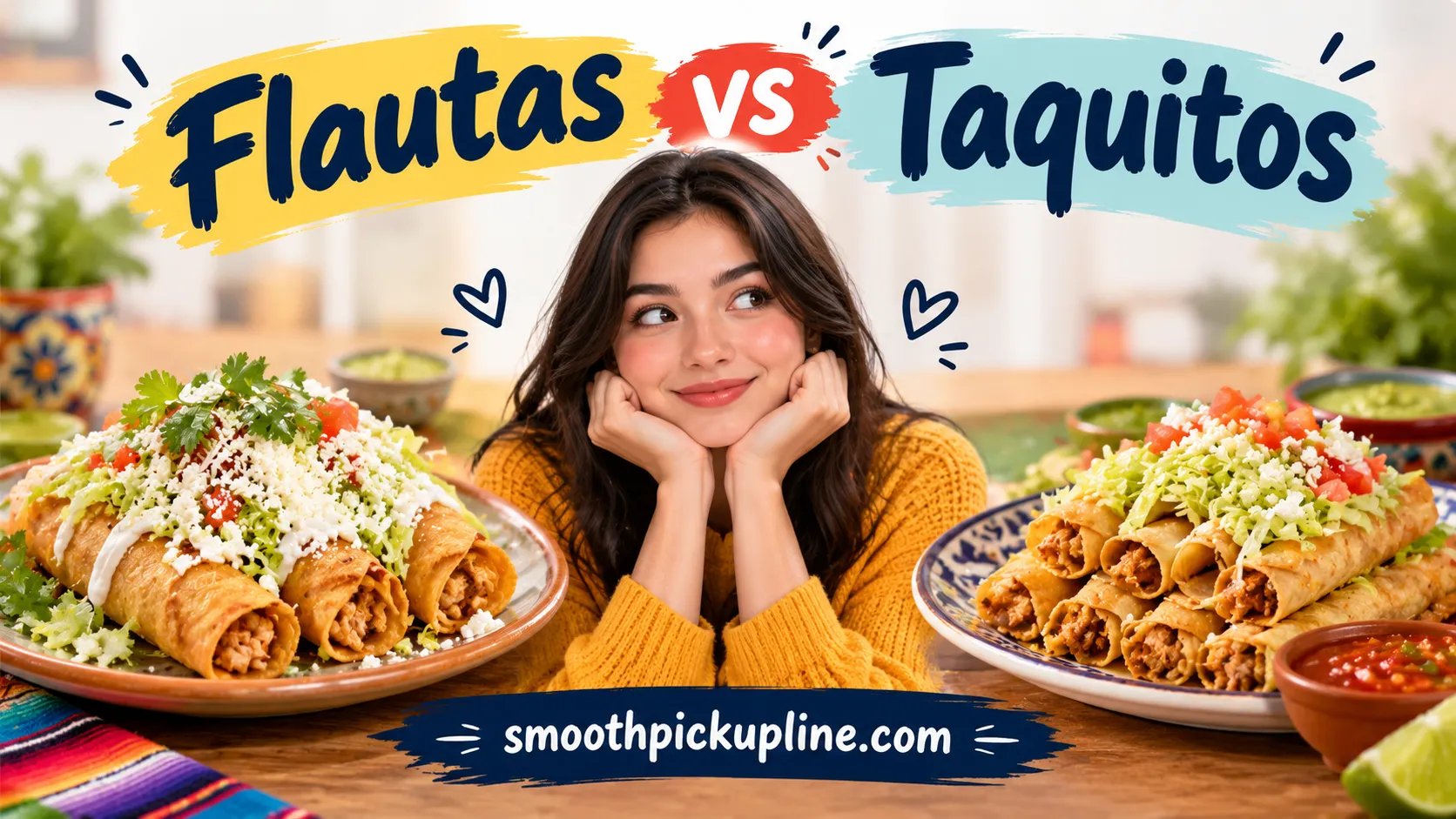
Flautas vs taquitos mainly differ in size, shape, tortilla choice, and regional naming. In the U.S., flautas are often longer and may use larger flour tortillas, while taquitos are usually smaller and made with corn tortillas.
However, these definitions are not universal: in Mexico, both names can refer to similar fried, rolled tortillas, and flautas can also be made with corn tortillas.
Key Takeaways
- Flautas are generally longer and thinner than taquitos.
- Taquitos are commonly smaller and tightly rolled.
- In the U.S., flautas are often associated with flour tortillas, while taquitos commonly use corn.
- In Mexico, the tortilla distinction is less reliable because flautas can also be made with corn tortillas.
- Tacos dorados is another overlapping term for crispy fried tacos, depending on the region.
What Is the Difference Between Flautas and Taquitos?
At first glance, flautas and taquitos can look almost identical. Both are rolled tortillas filled with savory ingredients and cooked until crisp. They can contain chicken, beef, potatoes, beans, or other fillings, and both are commonly served with salsa or creamy toppings.
So why are they given different names?
The simplest answer is size and shape. Flautas are generally longer and thinner, while taquitos tend to be shorter and more compact. The word flauta means “flute” in Spanish, referring to the long, slender shape. Taquito means “little taco,” which fits the smaller version.
However, tortilla type is often used to distinguish them in the United States. Many American restaurants describe flautas as larger flour-tortilla rolls and taquitos as smaller corn-tortilla rolls. That distinction is useful when reading a U.S. menu, but it should not be treated as a universal Mexican rule.
| Feature | Flautas | Taquitos |
| Typical size | Longer and larger | Smaller and shorter |
| Shape | Long, slender roll | Short, compact roll |
| U.S. tortilla convention | Often flour | Usually corn |
| Mexican usage | Can use corn or flour | Usually corn |
| Common fillings | Chicken, beef, potato, beans | Chicken, beef, potato, cheese |
| Cooking | Usually fried; baked versions exist | Usually fried; baked versions exist |
| Serving | Often a meal or larger plate | Often snack, appetizer, or small meal |
| Naming | “Flute” | “Little taco” |
The key point is that there is no single worldwide rule separating the two.
What Are Flautas?
Flautas are rolled, filled tortillas cooked until crisp. Their name comes from their long, flute-like appearance.
In many U.S. restaurants, a flauta is presented as the larger option. It may be made with a large flour tortilla and filled with shredded chicken or beef. Once rolled and fried, it becomes long, golden, and crunchy on the outside.
But Mexican usage can be different. Mexican sources describe flautas made with corn tortillas, with the larger tortilla producing the long, thin shape that distinguishes them from smaller tacos dorados. One Mexican source notes that flautas can be substantially longer than tacos dorados and are commonly served with toppings such as lettuce, crema, cheese, and salsa.
Tortilla and Size
There is an important distinction between common U.S. usage and regional Mexican usage.
In the United States, flour tortillas are frequently associated with flautas. In Mexico, however, corn tortillas are common for flautas as well. A recipe source describing Mexican flautas specifically uses corn tortillas and explains that larger tortillas create the characteristic longer, thinner roll.
That is why saying “a flauta is always flour and a taquito is always corn” can be misleading.
Common Fillings
Flautas can contain shredded chicken, beef, pork, potato, beans, vegetables, or other fillings. Chicken flautas are especially common on U.S. Mexican restaurant menus.
The filling is usually cooked before the tortilla is rolled. The completed roll is then fried until the outside becomes crisp.
Typical Toppings
Flautas are often served with toppings such as:
- Lettuce
- Mexican crema or sour cream
- Queso fresco
- Guacamole
- Salsa
- Avocado
The exact combination depends on the restaurant and region.
What Are Taquitos?
A taquito is essentially a small rolled taco. The Spanish name comes from taco with the diminutive ending -ito, giving the sense of a “little taco.”
Taquitos are commonly made with small corn tortillas and filled with ingredients such as shredded chicken, beef, cheese, or potatoes. They are rolled tightly and usually fried until crisp.
In the United States, the word taquito is especially common for the smaller, tightly rolled version. Frozen-food brands and restaurant menus also frequently use the term for compact rolled tacos.
Tortilla and Size
Taquitos are usually smaller than flautas. Their compact size makes them easy to serve as finger food, an appetizer, or part of a larger plate.
Corn tortillas are the standard choice in many descriptions because they create a crisp, sturdy shell after frying. However, just as with flautas, regional and restaurant terminology can vary.
Common Fillings
Popular taquito fillings include:
- Shredded chicken
- Shredded beef
- Ground beef
- Potato
- Cheese
- Beans
There is no rule that says one particular filling belongs exclusively to taquitos. Many fillings work for both dishes.
Flautas vs Taquitos: Side-by-Side Comparison
Tortilla
This is probably the most confusing part of the comparison.
In the U.S., menus often use flour tortillas for flautas and corn tortillas for taquitos. Several U.S.-focused food sources describe the dishes this way.
But Mexican cooking does not follow that division everywhere. Corn tortillas can absolutely be used for flautas. Mexican sources describe flautas as larger corn-tortilla rolls, particularly when distinguishing them from shorter tacos dorados.
Size and Shape
This is a more useful visual clue.
Flautas are generally longer and thinner, which explains their flute-inspired name. Taquitos are typically shorter and more compact.
The difference is not always exact, though. A restaurant can use different tortilla sizes, so two dishes may look very similar.
Fillings
Both can contain many of the same fillings.
Chicken, beef, potato, beans, and cheese can all appear in either dish. Because the filling does not reliably identify the dish, look at the overall size, shape, tortilla, and menu terminology instead.
Cooking Method
Both flautas and taquitos are commonly fried. Deep-frying gives the rolled tortilla its characteristic golden color and crisp texture.
Baked and air-fried versions are also common modern preparations, but frying remains a traditional and widely used preparation method.
Serving Style
Flautas are often presented as a more substantial plate, sometimes with several toppings and side dishes. Taquitos are frequently served as appetizers, snacks, or smaller portions.
Still, this is a serving convention rather than a strict definition. Either dish can appear as part of a full meal.
Are Flautas and Taquitos the Same Thing?
The most accurate answer is sometimes they overlap, but the terms are not always interchangeable.
In U.S. restaurant culture, the names often describe different sizes or tortilla styles. A long, large roll may be called a flauta, while several smaller corn-tortilla rolls may be called taquitos.
In Mexico, the boundaries can be much less rigid. Some regions use flautas, taquitos, and tacos dorados for closely related fried tortilla dishes. Mexican food sources specifically describe flautas and tacos dorados as overlapping traditions, with size and shape helping distinguish them in some places.
So if you encounter conflicting definitions online, that does not necessarily mean one source is wrong. Regional food terminology genuinely varies.
Flautas vs Taquitos in Mexican and U.S. Cuisine
This regional difference is especially important for anyone searching for an “authentic” definition.
Some U.S. food articles emphasize flour tortillas for flautas and corn tortillas for taquitos.
But recipes and Mexican food sources show that flautas can be made with corn tortillas. One Mexican tortilla company even describes flautas and tacos dorados together as rolled corn tortillas filled with ingredients such as chicken, potato, or meat.
This means the safest way to understand the dishes is to consider the whole preparation, not just the tortilla.
If a menu says “chicken flautas,” expect a long crispy rolled tortilla. If it says “chicken taquitos,” expect a smaller rolled tortilla. But the exact tortilla and toppings can depend on the restaurant.
Which One Should You Order?
If you want a longer, more substantial crispy roll, flautas are the term you will commonly see on U.S. restaurant menus.
If you want smaller, tightly rolled crispy tacos, taquitos are usually the description to look for.
If you’re ordering in a Mexican restaurant, though, pay attention to the actual menu description. The restaurant’s terminology may reflect a particular regional tradition rather than the simplified U.S. distinction.
In other words, the best way to avoid confusion is to look beyond the name and check the tortilla, size, filling, and toppings.
FAQs:
Are flautas made with corn or flour tortillas?
They can be made with either, depending on the region and restaurant. In U.S. restaurant usage, flautas are often associated with larger flour tortillas. In Mexico, corn tortillas are also commonly used for flautas, especially for the longer, thinner style.
Are taquitos always smaller than flautas?
Not always. Taquitos are generally smaller, and their name suggests a small taco, but there is no universal size standard. Restaurant portions and regional traditions can overlap. Size is best treated as a common distinction rather than an absolute rule.
Are flautas and tacos dorados the same?
They can refer to very similar dishes, and the terms sometimes overlap. Mexican sources describe flautas as longer and thinner versions of rolled fried tacos, while tacos dorados is a broader term for golden fried tacos. Regional naming makes a strict separation difficult.
Can flautas and taquitos have the same filling?
Yes. Chicken, beef, potato, beans, and cheese can all be used in both. The filling alone usually does not determine whether a dish is called a flauta or taquito.
Conclusion:
The Flautas vs Taquitos debate becomes much easier once you understand that the names are not governed by one universal rule.
Flautas are generally longer and thinner, while taquitos are usually smaller and more compact. In the U.S., tortilla type often adds another distinction, with flour associated with flautas and corn with taquitos.
However, Mexican regional traditions show that corn-tortilla flautas are common too. So rather than relying on one rule, consider the size, shape, tortilla, preparation, and local terminology together.