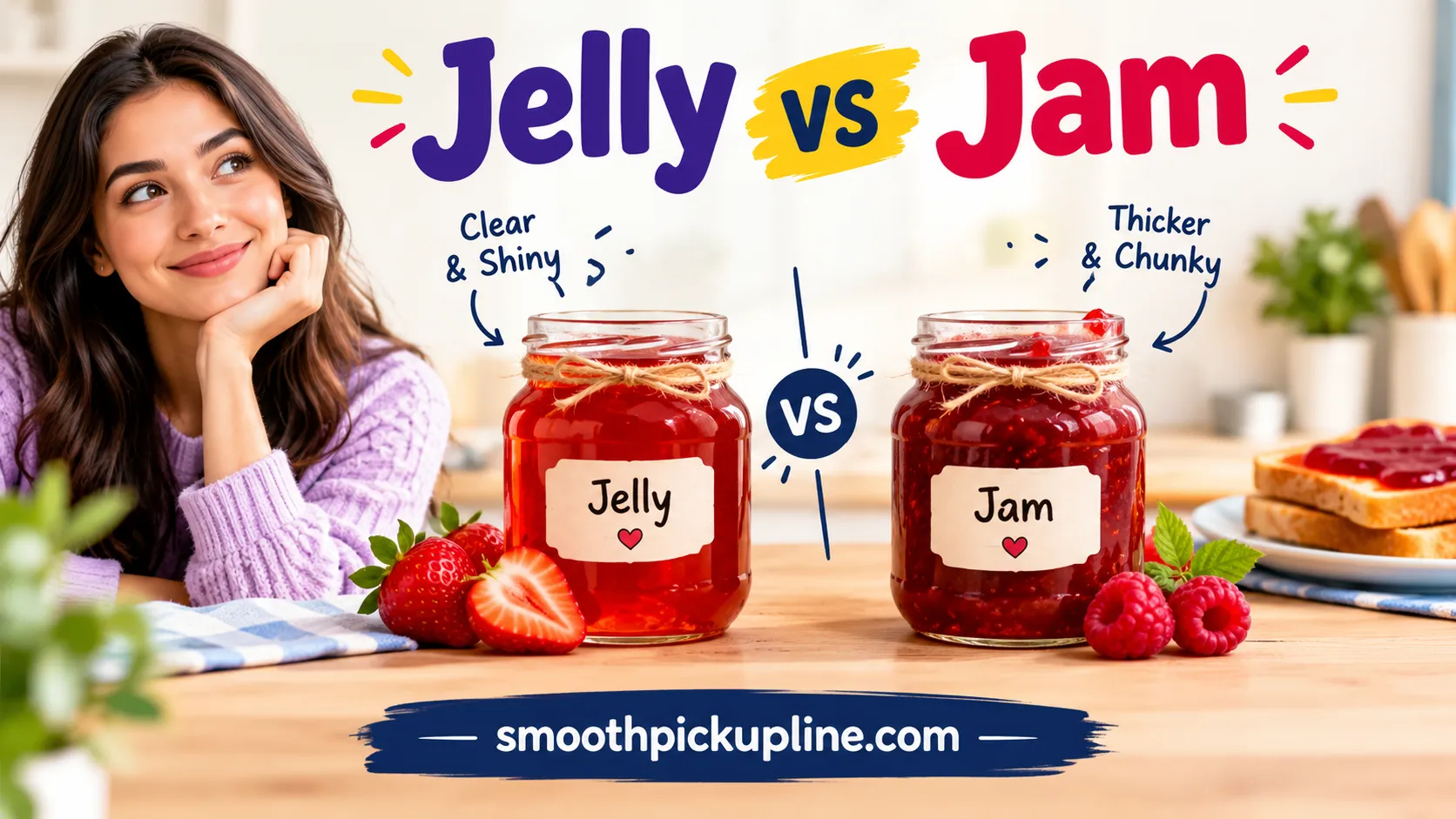
The main difference between jelly vs jam is how the fruit is prepared. Jelly is made primarily from filtered or strained fruit juice, giving it a smooth, firm texture.
Jam is made from crushed, ground, or chopped fruit, so it is thicker and may contain fruit pulp or small pieces.
Key Takeaways
- Jelly is made from fruit juice and is usually smooth, clear, and firm.
- Jam is made from crushed or ground fruit and usually has a thicker, softer texture.
- Both can contain sugar and gelling ingredients such as pectin.
- Jelly is especially common in classic American sandwiches such as PB&J.
- Jam works well when you want a stronger fruit texture and flavor.
- In U.S. food standards, jam and preserves are grouped together, while jelly has a separate standard.
What Is Jelly?
Jelly is a fruit spread made primarily from fruit juice. The fruit is processed so that the juice is separated from most of the pulp and solid fruit material. The juice is then concentrated with other ingredients to create the familiar smooth, gel-like spread. U.S. regulations specifically define standardized fruit jelly around fruit juice ingredients.
That process explains why jelly looks different from jam. A typical jelly is translucent or clear, has a smooth surface, and does not contain obvious pieces of fruit.
Think about classic grape jelly. When you scoop it from the jar, you generally see one smooth, uniform spread rather than crushed grapes or berry pieces.
How Jelly Is Made
The basic process starts with fruit. Its juice is extracted and filtered or strained. The resulting liquid is then concentrated and combined with the ingredients needed to create the desired consistency.
Pectin is commonly associated with fruit jellies because it helps create the gel structure. Sugar and acidity can also play important roles in the finished product.
The exact recipe varies by fruit and product, so not every jelly will look or taste exactly the same.
What Jelly Looks and Feels Like
Jelly is usually:
- Smooth
- Firm
- Glossy
- Translucent or clear
- Free of noticeable fruit pieces
- Easy to spread once loosened
Its uniform texture makes it especially useful when you want fruit flavor without seeds, pulp, or chunks.
What Is Jam?
Jam is a fruit spread made from crushed, ground, or chopped fruit. Unlike jelly, jam retains much more of the fruit itself, which gives it a thicker and often more textured consistency.
U.S. standards describe fruit preserves and jams as viscous or semisolid foods made from fruit ingredients and concentrated with or without heat.
Strawberry jam is a familiar example. Depending on how it is prepared, you may notice small pieces of strawberry, pulp, or seeds throughout the spread.
How Jam Is Made
To make jam, fruit is generally crushed, ground, or otherwise processed before being cooked and concentrated. Sugar and other ingredients may be used to help create the desired taste and consistency.
Because the fruit itself remains in the mixture, jam tends to have a more substantial texture than jelly.
The USDA also distinguishes canned fruit preserves or jams from jelly through separate standards and grading materials.
What Jam Looks and Feels Like
Jam is commonly:
- Thick
- Soft
- Opaque
- Fruity
- Spoonable
- Sometimes slightly chunky
- Sometimes filled with seeds or fruit pulp
The exact texture depends on the fruit and how finely it has been processed.
A smooth raspberry jam and a chunky strawberry jam can therefore feel quite different even though both are classified as jam.
Jelly vs Jam: Key Differences
The easiest way to remember the difference is simple:
Jelly uses fruit juice. Jam uses crushed or ground fruit.
That difference affects almost everything you notice when you open the jar.
Jelly vs Jam Comparison Table
| Feature | Jelly | Jam |
| Main fruit component | Fruit juice | Crushed, ground, or chopped fruit |
| Fruit pulp | Generally removed | Retained |
| Texture | Smooth and firm | Thick and softer |
| Appearance | Usually clear or translucent | Usually opaque |
| Fruit pieces | No noticeable pieces | May contain pieces or pulp |
| Seeds | Generally absent | May be present |
| Consistency | Gel-like | Spreadable and fruit-rich |
| Common use | Toast, sandwiches, glazes | Toast, pastries, baking, cooking |
These differences are consistent with U.S. standards, which define standardized jelly using fruit juice ingredients and separately define preserves and jams using fruit ingredients.
Fruit Content and Preparation
The fruit preparation is the biggest dividing line.
For jelly, the goal is to extract and use the fruit juice while removing most solid material. This produces the clean, uniform texture associated with jelly.
For jam, much more of the fruit remains. Crushing or grinding the fruit creates a spread that contains pulp and can include small pieces or seeds.
This is why you can usually identify the difference just by looking at the two jars.
Texture and Appearance
Jelly has a more consistent texture. It can hold its shape and often appears shiny and translucent.
Jam is usually softer and thicker. Because it contains fruit solids, it tends to look more opaque.
Neither texture is automatically better. It depends on what you want from the spread.
Flavor and Mouthfeel
Jelly can provide a clean, concentrated fruit flavor with a very smooth mouthfeel.
Jam can feel more substantial because the fruit pulp remains in the product. Depending on the fruit and recipe, it may provide a stronger impression of eating the fruit itself.
However, flavor varies greatly between brands and fruits, so you cannot assume every jam will taste stronger than every jelly.
Jelly vs Jam: Which One Should You Use?
The choice often comes down to texture and the recipe.
For Toast and Breakfast
Both work well on toast, English muffins, biscuits, and similar foods.
Choose jelly if you prefer a smooth spread without seeds or fruit pieces.
Choose jam if you enjoy a thicker spread with visible fruit texture.
For example, grape jelly gives toast a smooth, glossy layer, while strawberry jam adds a thicker fruit-filled texture.
For PB&J Sandwiches
In the United States, jelly is closely associated with the classic peanut butter and jelly sandwich.
Its smooth consistency pairs easily with peanut butter and spreads across bread without adding chunks.
That does not mean jam cannot be used. A strawberry or raspberry jam can also work in a peanut butter sandwich if you prefer fruit pieces or a thicker consistency.
For Baking and Cooking
Both jelly and jam can be useful in recipes.
Jelly’s smooth texture can work well when a recipe calls for a uniform fruit layer, filling, glaze, or sauce.
Jam is useful when you want more fruit texture in pastries, cookies, cakes, breakfast dishes, or savory recipes.
The recipe should be your guide. If a recipe specifically calls for jelly because of its smooth consistency, substituting a chunky jam can change the final texture.
Can You Substitute Jam for Jelly?
Yes, in many recipes you can substitute jam for jelly, but the result may be different.
The biggest change will usually be texture.
If you replace smooth grape jelly with chunky strawberry jam, for example, you will introduce fruit pulp and possibly seeds. The flavor will also change because you are using a different fruit.
The reverse is also true. Replacing jam with jelly can make a recipe smoother and less textured.
For a sandwich, the substitution is usually straightforward. For baking or cooking, check whether the recipe depends on the particular consistency of the spread.
Jelly vs Jam vs Preserves vs Marmalade
Jelly and jam are only two members of the larger fruit-spread family.
Jelly: Made primarily from fruit juice and known for its smooth, firm, often translucent texture.
Jam: Made from crushed or ground fruit and generally thicker and more fruit-textured.
Preserves: Typically contain recognizable pieces of whole fruit suspended in a thickened mixture. U.S. regulations group standardized fruit preserves and jams under the same section.
Marmalade: Usually associated with citrus fruit and pieces of peel suspended in a gel-like spread.
So if you remember only one progression, think of it this way:
Jelly = juice → Jam = crushed fruit → Preserves = larger fruit pieces.
Is Jelly Healthier Than Jam?
There is no universal answer based simply on whether a product is called jelly or jam.
Nutrition depends on the specific product, serving size, recipe, and ingredients. Two products made from the same fruit can have different amounts of sugar and other ingredients.
If nutrition is important to you, compare the Nutrition Facts and ingredient lists on the actual jars rather than assuming one category is automatically healthier.
Also remember that both jelly and jam are generally used as sweet spreads, so portion size can matter.
Common Questions About Jelly and Jam
Is jelly made from real fruit?
Yes. Traditional fruit jelly is made using fruit juice. U.S. standards for standardized fruit jelly specify fruit juice ingredients as the basis of the product.
The juice is processed and concentrated to create the smooth, gelled spread. Commercial products can vary in their exact ingredient lists, so checking the label is the best way to know what is in a particular jar.
Does jam have more fruit than jelly?
Jam retains more of the fruit itself because it is made from crushed or ground fruit, while jelly is made primarily from fruit juice. That is why jam normally contains fruit pulp and may contain small pieces or seeds.
However, “more fruit” should not automatically be interpreted as “healthier.” Product formulations vary.
Are jelly and jam the same thing?
No. They are similar fruit spreads, but they are made differently.
Jelly is based primarily on fruit juice and has a smooth, firm consistency. Jam is made from crushed, ground, or chopped fruit and usually has a thicker, more textured consistency.
In everyday conversation, people sometimes use the terms loosely, but the food products themselves have distinct characteristics.
What is jelly called in British English?
This is one of the reasons the word can be confusing.
In American English, “jelly” commonly means the smooth fruit spread used on foods such as toast or a peanut butter and jelly sandwich.
In British English, “jelly” commonly refers to a gelatin-based dessert, while a fruit spread that Americans might call jelly is generally called jam.
So when discussing food internationally, context matters.
Conclusion:
The easiest way to remember jelly vs jam is to focus on the fruit.
Jelly is made primarily from fruit juice, which gives it a smooth, firm, and often translucent texture. Jam is made from crushed, ground, or chopped fruit, so it is thicker and can contain pulp, seeds, or small pieces.
Both are useful fruit spreads, and the better choice depends on what you are making and which texture you prefer.
For a smooth PB&J, jelly is a familiar American choice. For toast, pastries, or recipes where you want more fruit texture, jam can be a natural option.
Once you remember juice = jelly and crushed fruit = jam, the difference becomes easy to spot.