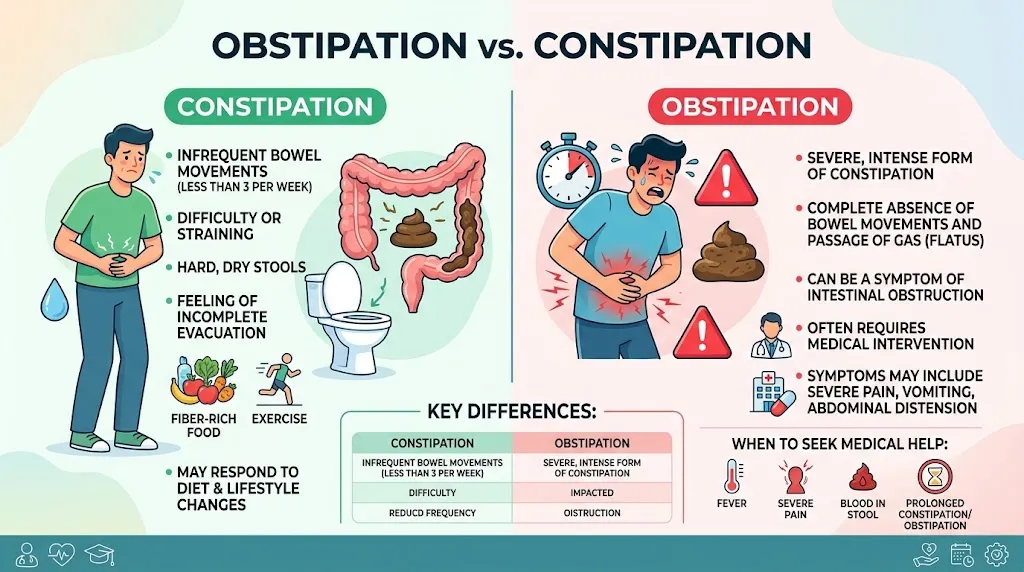
Obstipation vs constipation mainly differs in severity and stool passage. Constipation generally involves infrequent, hard, difficult, or incomplete bowel movements.
Obstipation describes a more severe failure to pass stool and often gas, and it can occur with fecal impaction or intestinal obstruction.
Because obstruction can be serious, obstipation with significant abdominal symptoms should receive prompt medical evaluation.
Key Takeaways
- Constipation can mean hard or difficult-to-pass stools, fewer bowel movements, or incomplete emptying.
- Obstipation refers to an inability to pass stool and often gas and may signal a more serious problem.
- Obstipation can occur with intestinal obstruction, fecal impaction, or other conditions affecting bowel movement.
- Passing no gas, especially with abdominal pain, swelling, nausea, or vomiting, deserves prompt medical attention.
- The two terms are related, but they should not be treated as interchangeable in every medical situation.
What Is the Difference Between Obstipation and Constipation?
The easiest way to understand obstipation vs constipation is to think about how completely stool is unable to move through the digestive tract.
Constipation is a common digestive problem. It may involve fewer bowel movements than usual, hard or dry stools, painful or difficult passage, or the feeling that some stool remains after using the bathroom. The National Institute of Diabetes and Digestive and Kidney Diseases (NIDDK) notes that people naturally have different bowel patterns, so bowel frequency alone does not determine whether someone is constipated.
Obstipation is a more severe term generally used when a person cannot adequately pass stool and often cannot pass intestinal gas. It can occur with severe stool retention, fecal impaction, or an intestinal blockage.
That distinction matters because inability to pass gas along with abdominal symptoms can be associated with intestinal obstruction. Merck Manual lists obstipation and lack of flatus among symptoms of intestinal obstruction.
Quick Comparison
| Feature | Constipation | Obstipation |
| Stool passage | Difficult, infrequent, or incomplete | Unable or severely unable to pass stool |
| Gas passage | Usually still possible | May be unable to pass gas |
| Stool consistency | Often hard, dry, or lumpy | May involve impacted or retained stool |
| Abdominal symptoms | Bloating or discomfort may occur | Pain, swelling, nausea, or vomiting may occur |
| Possible causes | Diet, medications, slow bowel movement, health conditions | Severe stool retention, fecal impaction, obstruction, or other bowel problems |
| Medical concern | Often manageable, depending on cause | May require urgent assessment, especially with obstruction symptoms |
These terms describe different clinical situations, and the exact cause cannot be determined from symptoms alone.
Constipation Symptoms and Causes
Constipation does not necessarily mean that a person has stopped having bowel movements completely.
According to the NIDDK, common features include fewer than three bowel movements per week, hard or lumpy stools, difficulty or pain during passage, and a sensation that not all stool has passed.
Other symptoms can include bloating, abdominal discomfort, or changes in normal bowel habits.
Common Causes of Constipation
Constipation can have many causes. These include slow movement of stool through the colon, changes in diet or daily routine, inadequate fiber intake, dehydration, low physical activity, and certain medications.
Medical conditions can also contribute. Examples include functional gastrointestinal disorders, diabetes, hypothyroidism, neurologic conditions, and structural problems involving the digestive tract.
This is why constipation should not automatically be blamed on one particular food or lifestyle habit.
Obstipation Symptoms and Causes
Obstipation is generally associated with a much more significant failure of stool movement.
A person may feel an urge to have a bowel movement but be unable to pass stool. In some cases, gas also cannot pass. Abdominal bloating or swelling, cramping, nausea, and vomiting may occur, particularly when an intestinal blockage is involved.
Possible Causes
One possible cause is fecal impaction, in which stool becomes so hard and retained that normal passage becomes difficult or impossible.
Another possibility is an intestinal obstruction. Obstructions can have different causes, including adhesions, hernias, tumors, twisting of the bowel, inflammatory conditions, or fecal impaction.
Certain medicines can also contribute to constipation and severe stool retention. NIDDK lists several medication categories associated with constipation, including some pain medicines, anticholinergic medicines, anticonvulsants, calcium-channel blockers, and iron supplements.
Because the underlying causes vary, obstipation should not simply be assumed to be ordinary constipation that has lasted longer.
Is Obstipation the Same as a Bowel Obstruction?
No. Obstipation and bowel obstruction are related terms, but they are not identical.
Obstipation describes a clinical state involving failure to pass stool and often gas. A bowel obstruction is a condition in which the normal passage of intestinal contents is significantly impaired or completely stopped because of a blockage or other problem.
An obstruction can cause obstipation, but obstipation can also be associated with severe fecal retention or other bowel problems.
This distinction is important because symptoms such as abdominal swelling, vomiting, significant pain, and inability to pass gas can point toward a potentially serious intestinal problem. Merck Manual identifies obstipation and lack of flatus among the clinical features associated with intestinal obstruction.
Can Constipation Become Obstipation?
Severe or untreated constipation can contribute to fecal impaction and, in some circumstances, a state in which stool can no longer be passed normally.
However, it is not accurate to say that every case of constipation will progress to obstipation. Most constipation is not an intestinal obstruction.
The important issue is a change from ordinary difficulty passing stool to symptoms suggesting that intestinal contents are no longer moving normally. In particular, inability to pass gas combined with abdominal pain, swelling, vomiting, or worsening symptoms deserves prompt medical assessment.
How Doctors Distinguish the Two
A healthcare professional does not diagnose constipation or obstipation from one symptom alone.
Doctors may ask about bowel movement frequency, stool appearance, duration of symptoms, abdominal symptoms, previous abdominal surgery, medical conditions, and medications. NIDDK notes that evaluation may include a medical and family history, physical examination, and selected medical tests depending on the person’s symptoms.
Medical History and Physical Examination
A clinician may examine the abdomen for swelling, tenderness, pain, or masses. Depending on the situation, a rectal examination may also be performed.
The goal is not simply to determine whether someone is “constipated.” It is to identify the underlying reason for the change in bowel function and determine whether a more serious problem could be present.
Testing and Imaging
When obstruction or another significant problem is suspected, doctors may use imaging or other diagnostic tests.
Merck Manual notes that intestinal obstruction is diagnosed clinically and confirmed with imaging such as abdominal radiographs. Other tests may be selected according to the suspected cause and the patient’s symptoms.
When Constipation or Obstipation Needs Medical Attention
Occasional constipation can be common, but certain symptoms should not be ignored.
NIDDK recommends seeking medical care promptly when constipation occurs with symptoms such as rectal bleeding, blood in the stool, constant abdominal pain, inability to pass gas, vomiting, fever, lower back pain, or unexplained weight loss.
In particular, inability to pass gas plus abdominal pain or swelling and vomiting can be concerning for intestinal obstruction. That situation should be evaluated by a healthcare professional rather than assumed to be ordinary constipation.
If these symptoms are happening now, especially if they are severe or worsening, tell a parent, guardian, or another trusted adult and seek appropriate medical care promptly.
FAQs:
Is obstipation worse than constipation?
Generally, obstipation describes a more severe failure to pass stool, often accompanied by inability to pass gas. Constipation is a broader term that includes difficult, infrequent, hard, or incomplete bowel movements. Because obstipation can be associated with intestinal obstruction, it may require more urgent evaluation than uncomplicated constipation.
Can you have obstipation and still pass gas?
The term obstipation is commonly associated with inability to pass both stool and gas, although terminology can vary between clinical sources. Inability to pass gas is particularly important when it occurs with abdominal pain, swelling, nausea, or vomiting because these symptoms can occur with intestinal obstruction.
Is obstipation always caused by a bowel obstruction?
No. Obstipation can occur with severe stool retention or fecal impaction as well as with intestinal obstruction. Because several conditions can produce similar symptoms, the underlying cause needs to be evaluated rather than assumed from the term alone.
When should I seek medical care for constipation?
Seek medical attention when constipation does not improve or is accompanied by warning signs such as blood in the stool, rectal bleeding, constant abdominal pain, inability to pass gas, vomiting, fever, or unexplained weight loss. These symptoms can indicate a medical problem that needs evaluation.
Conclusion:
The main difference in obstipation vs constipation is the degree to which stool and intestinal gas can move through the bowel.
Constipation commonly involves hard, difficult, infrequent, or incomplete bowel movements, while obstipation describes a more severe inability to pass stool and often gas.Obstipation is not simply another word for everyday constipation.
It can be associated with fecal impaction or intestinal obstruction, so symptoms such as inability to pass gas, abdominal swelling, significant pain, or vomiting deserve prompt medical attention.