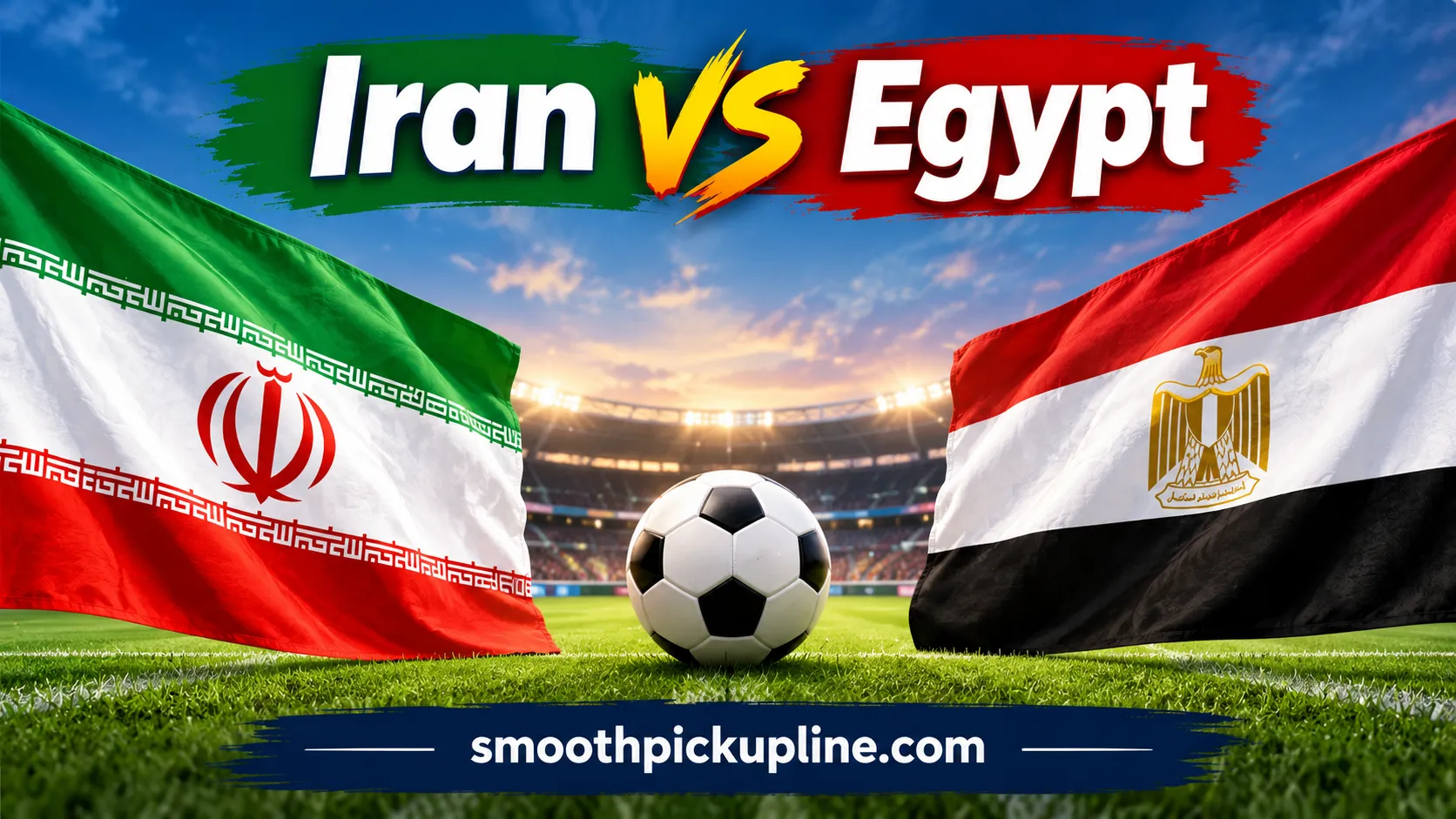
Iran and Egypt are two major countries in the Middle East and North Africa region, but they differ in geography, language, culture, demographics, and political history.
Iran is in Western Asia and is primarily Persian-speaking, while Egypt is in northeastern Africa and is predominantly Arabic-speaking. In 2026, the countries also met in the FIFA World Cup, drawing 1–1.
Key Takeaways
- Egypt has a larger population than Iran, with about 118.4 million people compared with Iran’s 92.4 million in 2025.
- Iran covers a larger land area and has a higher GDP per capita than Egypt in recent World Bank data.
- Persian is the main language of Iran, while Arabic is the main language of Egypt.
- Iran and Egypt have a long and complicated diplomatic history dating back decades.
- Their 2026 FIFA World Cup meeting ended in a 1–1 draw.
Iran vs Egypt at a Glance
Iran and Egypt are both influential countries in their respective regions, but they are not neighboring countries and have distinct historical identities.
| Category | Iran | Egypt |
| Capital | Tehran | Cairo |
| Main region | Western Asia | North Africa |
| Main language | Persian | Arabic |
| 2025 population | 92.4 million | 118.4 million |
| 2025 GDP | $362.7 billion | $365.3 billion |
| 2025 GDP per capita | $3,924 | $3,086 |
| Currency | Iranian rial | Egyptian pound |
| Major geographic feature | Iranian plateau, Caspian Sea, Persian Gulf | Nile River, Mediterranean Sea, Red Sea |
The World Bank’s latest available data show that Egypt had the larger population in 2025, while the two economies were very close in nominal GDP. Iran’s GDP per capita was higher in the same dataset.
Geography and Location
Where Iran Is Located
Iran is located in Western Asia. It has coastlines along the Caspian Sea to the north and the Persian Gulf and Gulf of Oman to the south.
Its geography includes mountains, deserts, plateaus, forests, and extensive arid regions. Tehran, the capital, is located in the northern part of the country near the Alborz mountain range.
Iran’s geographic position connects Central Asia, the Caucasus, the Middle East, and South Asia, giving the country an important regional location.
Where Egypt Is Located
Egypt is located in northeastern Africa, although the Sinai Peninsula extends into Asia.
The country is strongly shaped by the Nile River. Most of Egypt’s population lives close to the Nile Valley and Delta, while large parts of the country consist of desert.
Egypt also has coastlines along the Mediterranean Sea and the Red Sea. Its location gives it an important connection between Africa, Asia, and Europe, particularly through the Suez Canal.
The World Bank describes Egypt’s strategic location as a gateway between Africa, Asia, and Europe.
Iran vs Egypt: Economy and Population
Population
Egypt has the larger population.
World Bank data put Egypt’s 2025 population at approximately 118.4 million, compared with approximately 92.4 million for Iran. Egypt’s population growth rate was also higher in 2025.
This difference matters because population size affects the scale of domestic markets, labor forces, infrastructure needs, and public services.
GDP and GDP Per Capita
The two economies are surprisingly close in overall nominal GDP.
For 2025, the World Bank reports GDP of about $365.3 billion for Egypt and $362.7 billion for Iran. However, because Iran has a smaller population, its GDP per capita was higher: about $3,924 compared with Egypt’s $3,086.
Older 2024 World Bank figures similarly showed Iran ahead in GDP per capita, although exchange rates and economic conditions can cause these dollar-denominated comparisons to change over time.
Economic Structure
Egypt has a diverse economy built around services, manufacturing, agriculture, tourism, communications, and activity connected with the Suez Canal. The World Bank notes that the country’s large domestic market and strategic location are important economic advantages.
Iran also has a diversified economy, with major roles for energy, manufacturing, agriculture, services, and domestic industries. Economic conditions in Iran have been heavily affected by sanctions, trade restrictions, inflation, and regional instability.
Because economic data can change quickly, comparisons should always specify the year being used.
Culture, Language, and Religion
One of the biggest differences in an Iran vs Egypt comparison is cultural identity.
Iran is primarily associated with Persian culture and language. Persian, also called Farsi, is the main language, and Iran has a long historical tradition associated with ancient Persia.
Egypt is primarily associated with Arab culture and the Arabic language. Egyptian Arabic is widely spoken in everyday life, while Modern Standard Arabic is used in formal contexts.
Both countries have predominantly Muslim populations, but their religious landscapes are not identical. Iran is predominantly Shia Muslim, while Egypt is predominantly Sunni Muslim.
Their histories also developed differently. Iran’s history includes ancient Persian empires and later Islamic dynasties, while Egypt’s history includes ancient Egyptian civilization, Greco-Roman rule, Islamic dynasties, Ottoman rule, and modern Egyptian nationalism.
History and Relations Between Iran and Egypt
Iran and Egypt have had periods of cooperation, disagreement, and diplomatic tension.
Their modern relationship included an important royal connection in 1939, when Egyptian Princess Fawzia married Mohammad Reza Pahlavi, who later became Iran’s shah. The countries also maintained diplomatic relations during parts of the 20th century.
Relations became more difficult during the era of Egyptian President Gamal Abdel Nasser and Iran’s Shah. Different approaches to regional politics and international alliances contributed to tensions between Cairo and Tehran.
The relationship improved during the presidency of Anwar Sadat, and Iran and Egypt restored full relations in 1970. The relationship later changed dramatically after Iran’s 1979 Islamic Revolution and Egypt’s peace agreement with Israel.
The two countries have since made periodic efforts toward better relations. In the 2020s, Iranian and Egyptian officials held discussions aimed at improving ties, although the relationship has remained complicated.
Iran vs Egypt in Football
The phrase “Iran vs Egypt” can also refer specifically to football.
The two national teams met at the 2026 FIFA World Cup in Group G on June 26, 2026, at Seattle Stadium in the United States.
The match ended Egypt 1–1 Iran. Mahmoud Saber gave Egypt the lead in the fifth minute, while Iran’s Ramin Rezaeian equalized in the 14th minute.
The result was significant for Egypt because the draw helped the team reach the knockout stage of the World Cup for the first time. Iran finished third in Group G and had to wait for the final third-place calculations to determine its tournament fate.
The 2026 meeting was also only the second recorded meeting between the senior men’s national teams in the available head-to-head record. Their previous meeting, a 2000 friendly, also ended 1–1 before Iran won the penalty shootout.
Is Iran Bigger Than Egypt?
Yes, Iran is larger by land area, even though Egypt has the larger population.
Iran has a land area of roughly 1.5 million square kilometers, while Egypt’s land area is around 1 million square kilometers. This means Iran has substantially more territory, while Egypt has more people concentrated across a smaller area.
The difference becomes especially noticeable when considering population density. Much of Egypt’s population is concentrated along the Nile Valley and Delta, whereas Iran’s population is distributed across a much broader and more varied landscape.
Iran vs Egypt: Key Differences
The simplest way to understand the comparison is to focus on the categories rather than trying to reduce the two countries to one overall measure.
Geography: Iran is in Western Asia, while Egypt is mainly in northeastern Africa.
Population: Egypt has the larger population, with about 118.4 million people versus Iran’s 92.4 million in 2025.
Economy: Their overall nominal GDP was nearly equal in 2025, while Iran had the higher GDP per capita.
Language: Persian is dominant in Iran; Arabic is dominant in Egypt.
Culture: Iran’s national identity is strongly connected to Persian history, while Egypt’s modern identity is strongly connected to Arab and ancient Egyptian heritage.
Geography: Iran has a much larger land area, while Egypt’s population is highly concentrated around the Nile.
Football: Their 2026 World Cup match finished 1–1.
FAQs:
Is Iran bigger than Egypt?
Yes. Iran is considerably larger than Egypt by land area. However, Egypt has a larger population. World Bank data for 2025 estimate Egypt’s population at about 118.4 million and Iran’s at about 92.4 million.
Which country has a larger population, Iran or Egypt?
Egypt has the larger population. The World Bank’s 2025 figures show approximately 118.4 million people in Egypt compared with 92.4 million in Iran.
Are Iran and Egypt Arab countries?
Egypt is an Arab country and is a member of the Arab League. Iran is not an Arab country; its dominant language and cultural heritage are Persian. Both countries, however, are important states in the broader Middle East and have predominantly Muslim populations.
What was the Iran vs Egypt World Cup score?
Iran and Egypt drew 1–1 in their 2026 FIFA World Cup Group G match on June 26, 2026. Mahmoud Saber scored for Egypt and Ramin Rezaeian scored for Iran.
Conclusion
Iran vs Egypt is more than a simple country comparison because the two nations differ in geography, language, history, demographics, and cultural identity.
Egypt has the larger population, while Iran covers more land and had a higher GDP per capita in the latest World Bank figures. Their historical relationship has also moved through periods of cooperation and tension.
For football fans, the comparison has an especially current connection: their 2026 FIFA World Cup meeting ended in a 1–1 draw in Seattle.